Dubai villas in 2026: build or buy your next home?
A practical way to compare a ready villa with a custom home, beyond the asking price.
What are you actually comparing?
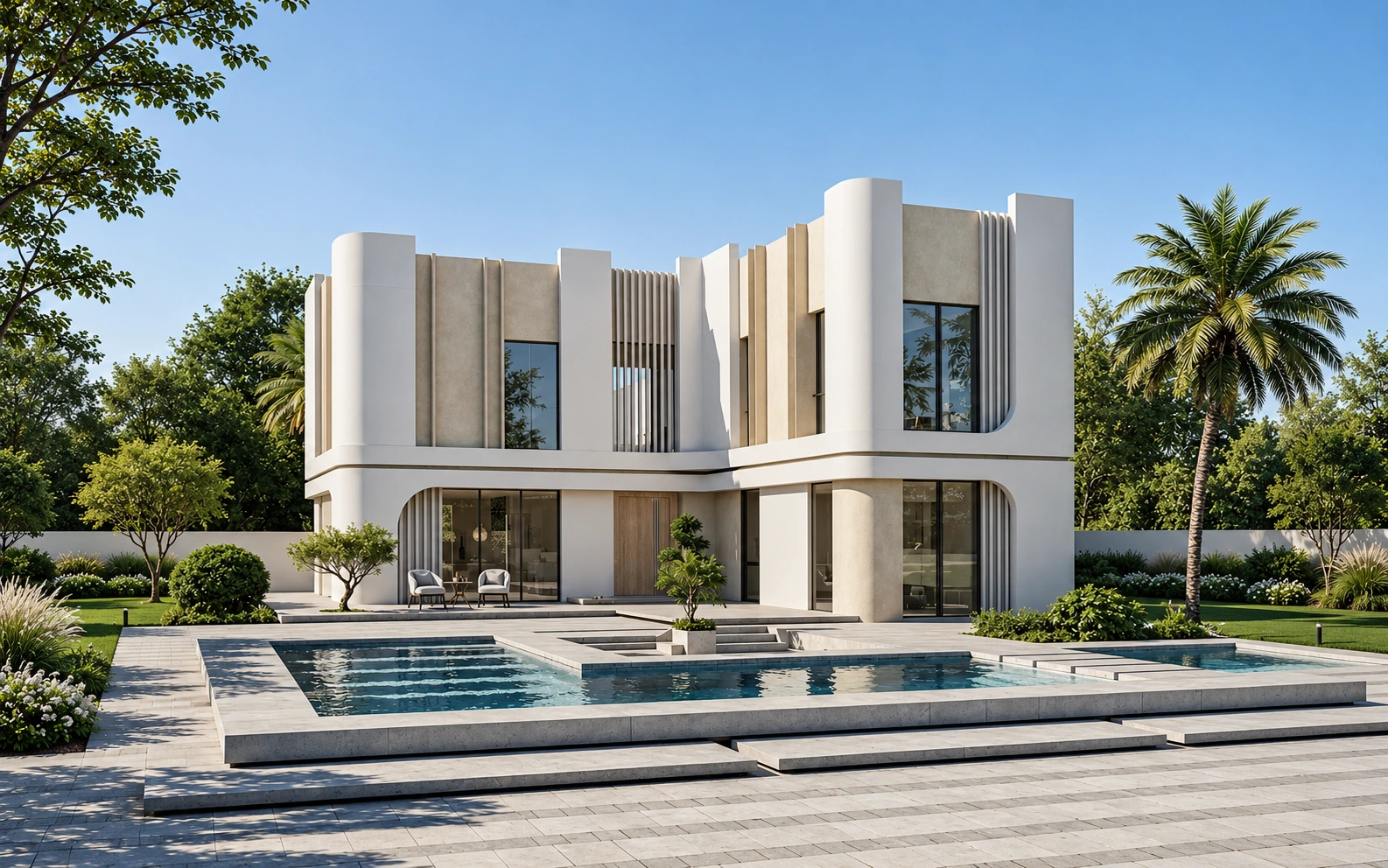
For a family choosing a villa in Dubai, the decision to build or buy is rarely settled by one asking price. A ready home offers an existing address, a layout you can walk through and a condition you can inspect. A custom villa offers the chance to organise the house around the family: a separate majlis entrance, a quieter bedroom wing, generous storage or a living room connected to the garden. Start with these needs before comparing façades. Write down what must work on the first day and what may change over the next ten years. The strongest choice is the one that meets that brief within a credible budget and programme.
Reading the Dubai property market in context
CBRE’s review published on 3 November describes a more moderate pace in Dubai residential activity and price growth during Q3 2026. That broad observation is useful context, but it does not establish the price of a particular family villa. Separate apartments from villas, completed homes from off-plan sales, and one neighbourhood from another. A citywide headline cannot capture the differences between a well-maintained house with an efficient plan and a similar-sized property needing extensive work. For a household planning to live in the home, the daily suitability of the location and layout deserves its own assessment alongside market evidence.
Build a useful set of comparables
Dubai Land Department provides a public property-data portal with transaction filters. Use recorded sales as a starting point, then narrow the comparison by area, property type and date. Keep a separate note for land size, built area, age, condition and any major refurbishment. If a listing uses a different area definition, ask for clarification before calculating a price per square foot. Do not mix an asking price with a completed transaction as though both represent the same evidence. A short list of carefully matched homes is more useful than a long list of unrelated properties gathered across Dubai.
Compare the cost of being ready to move in
For an existing villa, record the purchase scope and the work needed before occupation: kitchen changes, bathroom upgrades, air-conditioning repairs, waterproofing checks and garden work, where relevant. For a new build, separate land, design, approvals, construction, finishes and external works. Then identify the items outside the quotation, such as loose furniture or specialist equipment. Keep the assumptions beside the totals rather than hidden in a note. A lower initial figure may simply describe a smaller scope. This is a comparison framework, not a fixed cost estimate; the drawings, site conditions and written specification are what allow a project team to price the work.
Treat time as part of the brief
A ready villa may suit a family with a firm move-in deadline, provided the condition and transaction process match that deadline. Building introduces design decisions, approvals, procurement and construction sequencing. Ask the team to identify the decisions that affect the programme: selecting windows, confirming kitchen layouts or approving finish samples. Agree who makes each decision and when. If you are renting while work proceeds, include that period in your planning. Avoid choosing between build and buy using only an optimistic completion date; compare a practical programme with clear dependencies and room for changes.
Test the home against everyday routines
Visit a shortlisted location at different times if possible. Think through school journeys, guest parking, service access and privacy from neighbouring plots. Inside the plan, trace the routes from the entrance to the majlis, from the kitchen to dining, and from bedrooms to family living. Consider whether a ground-floor bedroom could support changing family needs. For a custom villa, this exercise becomes a design brief; for a ready home, it reveals which compromises you can accept and which would require alterations. Bring a location, room list, architectural references and spending priorities to the first consultation. Bait Al Omor can then discuss the design and project-management scope around a real family brief.
Before you decide
Give each option a simple score against your own priorities: layout, location, total scope, timing and the changes still needed. Keep evidence beside the score, such as a measured drawing, an inspection note or a written quotation. If one option wins only because its missing costs have not been considered, the comparison is not finished. Review the result with the family and the relevant project professionals before committing to a direction.